Some solutions already exist, while others have yet to be invented. The real challenge is to coordinate them collectively, in a way that closely reflects real-world applications.
The Findings
The issue of adapting to rising temperatures is not new. Although it has been well-documented for more than fifteen years, neither the public debate nor industry practices are keeping pace with the accumulated knowledge. Every heat wave reignites the discussion as if it were happening for the first time—a phenomenon now amplified by social media, which stirs up feelings of anger and helplessness with every heat spike. Beyond the particularly intense heat waves that capture the public’s attention, the construction industry must now factor in a sustained rise in summer temperatures.
This isn’t a matter of will. It’s a systemic problem. Public policy relies on technical expertise that, in itself, does not always reflect the actual uses of buildings and their occupants. Although each stakeholder acts with the best of intentions, interests may diverge, and the prisoner’s dilemma trap closes in.
Active cooling solutions—particularly air conditioning—cannot, on their own, meet the challenge of ensuring comfort during the summer. They come with side effects and, for specific applications, must be used to complement a design that is primarily aimed at preventing buildings from overheating.
Three breaks in this chain
- National regulations, regional realities. National requirements for energy performance and summer comfort are applied uniformly across regions whose resources, constraints, and vulnerabilities differ significantly.
What works in Grenoble—where cooling can rely on cold water available year-round—does not necessarily work in Lyon. Imposing a single standard amounts to ignoring the specific characteristics of each region, sometimes even at the cost of trade-offs between low-carbon goals and resilience. - Winter comfort is a priority in building design and construction, at the expense of summer comfort. We continue to build buildings that meet code requirements—compliant on paper, but not necessarily resilient in practice: they are not designed to evolve, to absorb occasional spikes or shifting climate patterns, or to adapt to uses that will have changed in twenty years.
- The lack of a common standard. What constitutes an acceptable level of comfort in the summer? Twenty-eight degrees? Thirty with a fan? This lack of a shared definition prevents any rational decision-making: without a common framework, and without a discussion that brings together all stakeholders in the value chain—from the client to the end users—each player sets its own standards. Collective efforts become difficult to coordinate, and investments difficult to prioritize.
What's Really Missing
The market cannot indefinitely absorb the cost of climate adaptation without setting priorities. And setting priorities requires establishing common standards for livability for the coming decades—standards defined not only by experts, but also in collaboration with the people who will be living with them on a daily basis.
This also requires accepting a certain degree of human adaptation: collectively learning to cope with a tolerable level of discomfort during peak periods, rather than striving for permanent and universal comfort, which is neither financially sustainable nor necessarily environmentally desirable.
Solutions already exist—technical, organizational, and behavioral. Others have yet to be devised. But the real challenge lies elsewhere: it lies in our collective ability to integrate these solutions, to adapt them to the realities of each region and each use case, rather than simply juxtaposing them without an overarching coherence.
A collective effort, starting now
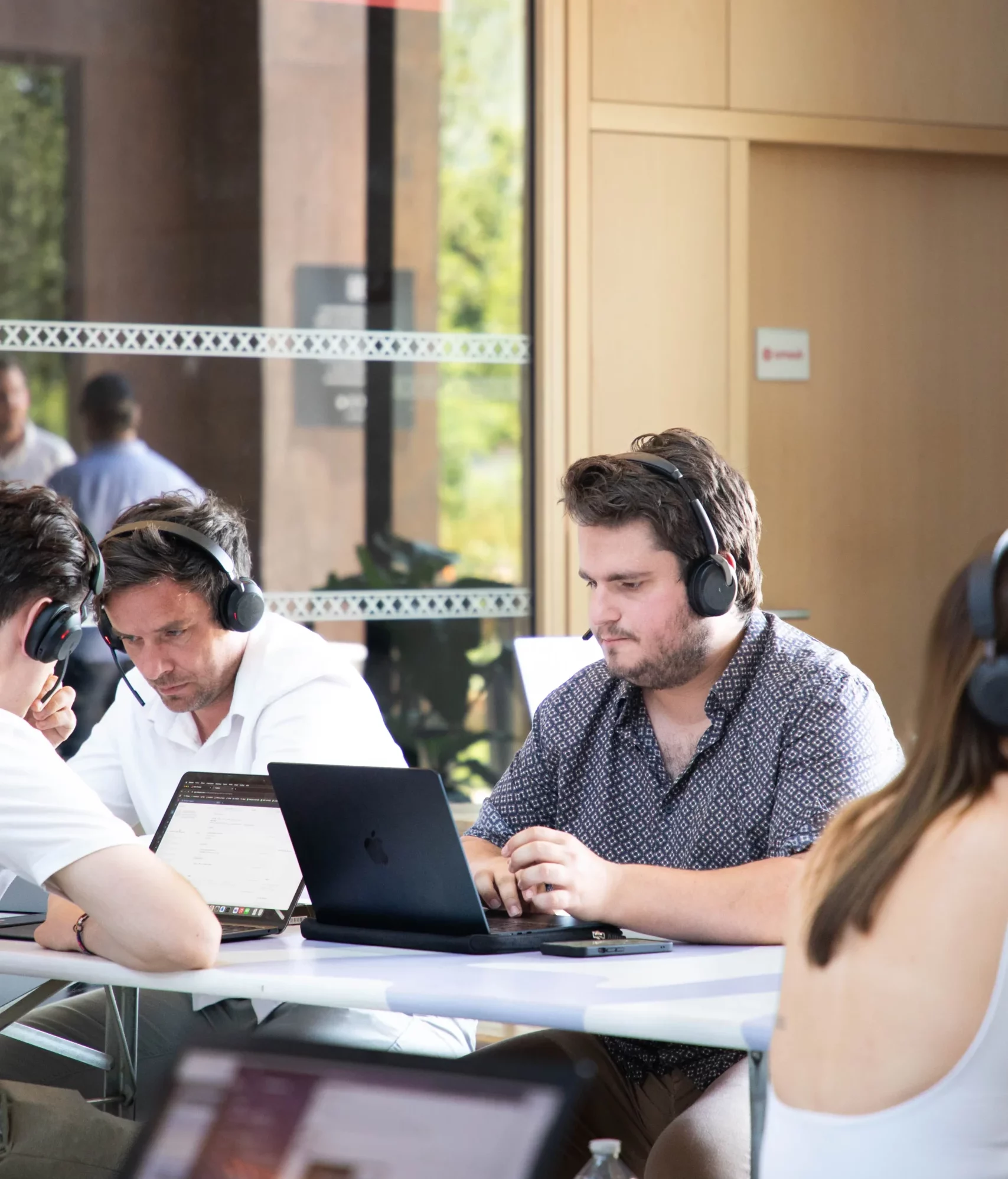
This is the very purpose of the initiative launched by H7 and Urban Odyssey. Thirty stakeholders in Lyon’s construction sector—landlords, urban planners, developers, operators, users, project managers, and local governments—came together for an initial workshop focused on summer comfort to share their observations and perspectives before even beginning to seek solutions. This step was deliberately taken early in the process to collectively align on the challenges and develop a response that reflects the diversity of uses, rather than a solution imposed from above.
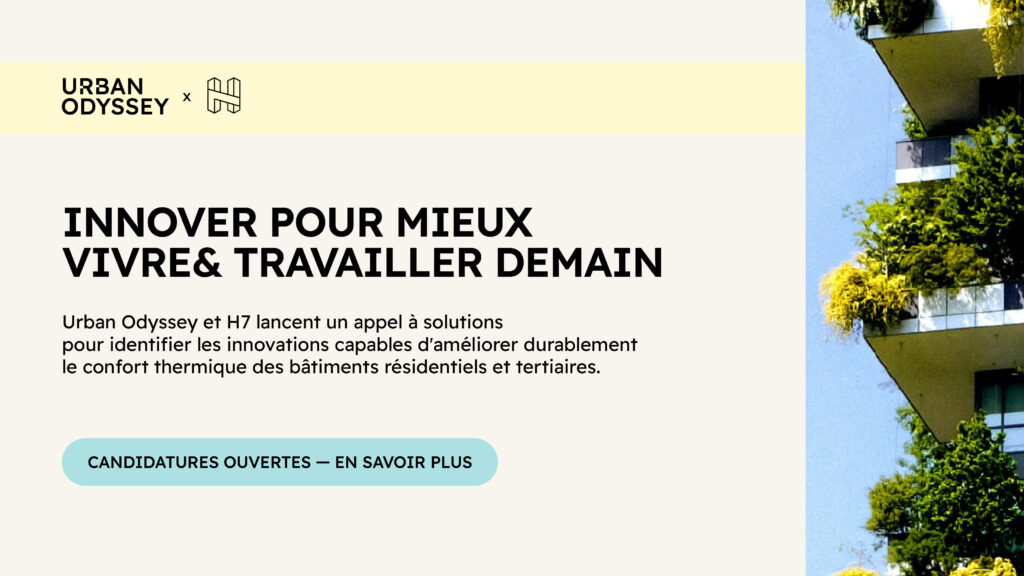
This collective reflection is now being followed up with a call for solutions—open through November—to identify, support, and strengthen the most promising initiatives in light of the challenges identified. We look forward to seeing you in November 2026 at H7 for an event showcasing the selected solutions, attended by all stakeholders who have been involved since day one.
One way to demonstrate, on a regional scale, that climate adaptation in the building sector cannot be achieved by decree alone: it must be coordinated collectively.
Selena Miniscalco
Communications Manager